The first time sand shifts under your tyres, the steering goes light and the track behind you quietly fills in. That is usually the moment people get hooked. A first desert trip does not require a modified rally car or years of experience. It needs a prepared vehicle, a route that matches your ability, and a short set of habits you repeat until they become automatic.
Getting the Vehicle Ready
Most desert trouble starts before you reach the sand. Service the vehicle a few weeks ahead rather than the night before: cooling system, belts, hoses, brakes and suspension all work harder in heat and dust. Check the air filter, because a clogged one costs you power exactly when you need it, and carry a spare.
Tyres matter more than almost anything else. All-terrain tyres in good condition, a full-size spare, a working pressure gauge and a compressor to reinflate. Recovery gear is not optional either: a long-handled shovel, a pair of recovery boards, a rated tow strap, shackles and a broad base plate for the jack so it does not sink.
Pack drinking water separately from washing water, in containers you can carry by hand if you have to walk. Keep heavy items low and central, and remember that anything on a roof rack raises your centre of gravity on a side slope.
Tyre pressures
Lowering pressures is the biggest single change you will make, and the right figure depends on your vehicle, its load and the sand itself. Ask the operator, club or guide you are travelling with, use their number, and reinflate properly before you rejoin tarmac.
Choosing a Route That Suits You
Start on graded tracks, gravel plains and the fringes of dune fields. Routes that are routinely driven by tour vehicles usually have firm, well-marked lines and only short soft sections. Long climbs, big bowls and narrow ridge crossings can wait until the vehicle and your instincts are familiar with each other.
Permits and access rules are easy to overlook. Many protected areas, border regions and military zones need permission, and the rules change with the seasons, so confirm before you plan your fuel and water. A track that has been closed for years may still appear on an old map.
Why a guided first trip earns its place
On a guided convoy you follow a lead vehicle that reads the sand, you stay on a radio channel, and someone else knows where the firm ground is. You will learn more in two days behind an experienced guide than in a month of guessing. If you would rather drive your own 4x4, look for a club trip or a commercial tour that lets you bring your own vehicle.
Driving on Sand
Sand rewards smoothness. Keep momentum, use a gear that lets the engine pull without revving hard, and steer with small corrections. Do not fight the wheel when the front tyres wander; ease off slightly and let the vehicle settle.
Avoid stopping on an incline, particularly on a climb, because restarting from a standstill is where most people dig themselves in. Crest a dune slowly, since you cannot see what is on the other side, and descend straight in a low gear with gentle braking rather than a stamp on the pedal.
Side slopes feel alarming the first time. Cross them only when the surface is firm, keep the wheels straight, and if the vehicle starts to slide, steer gently downhill rather than uphill. If you feel the sand give way, stop early and reverse down your own tracks instead of spinning the wheels. Spinning only digs deeper.
Safety Habits Worth Repeating
Desert trips are safe when they are boring, and they are boring when you repeat the same checks every day.
- Travel in at least two vehicles, and never alone in remote country.
- Carry a radio or satellite messenger; mobile coverage disappears quickly.
- Leave a route plan and expected return time with someone who will act on it.
- Carry more water than you think you need, allow several litres per person per day in heat, and keep a reserve you do not touch.
- Take a first aid kit, personal medication, sun protection, and warm layers for cold nights.
- Use a paper map alongside any device, and note waypoints as you go.
- Set a turn-back rule based on fuel and daylight, then keep it.
Watch for heat exhaustion in yourself and in others: headache, nausea, dizziness or confusion mean stop, find shade, drink fluids and, if it does not improve, seek medical help. That is general guidance only — for personal health concerns, speak to a doctor before travelling.
Camp Routine
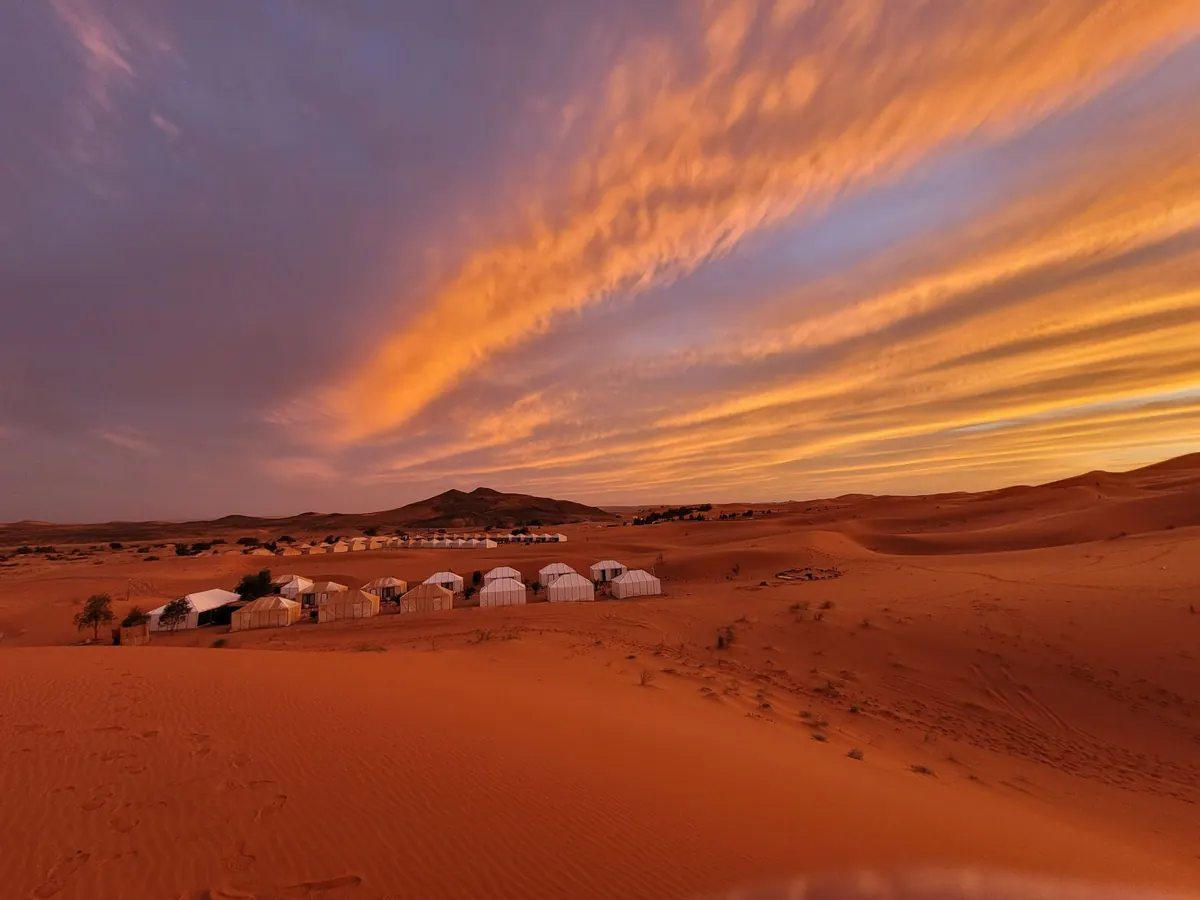
Arrive with at least an hour of daylight. Setting up in the dark on unfamiliar ground is how people end up pitching tents in a wadi bed or on a slope. Look up as well as around: avoid steep dune faces that shed sand, and avoid dry watercourses, which can flood fast after rain somewhere far away.
Pitch so the narrow end of the tent faces the wind, anchor with sand stakes or buried bags, and put a mat and insulation under your sleeping bag, because desert nights get genuinely cold. Cook outside, never inside a tent, and store fuel away from where you sleep.
Leaving no trace
Take all rubbish out with you, including food scraps and tea bags. Where toilet pits are permitted, dig them well away from camp and from any water, and pack out what will not break down. Light fires only where they are allowed, using dead wood rather than the shrubs that hold the dunes together. Greet people you meet, ask before photographing anyone, and give livestock and wildlife plenty of room. If a local says a track is impassable, believe them.
Your First Trip in Practice
Book a guided or club trip for your first outing, hire a properly equipped 4x4 if you do not have one, and choose a short route with an easy exit. Spend an afternoon practising tyre pressures, board recovery and reversing out of a bogged hole on flat, forgiving sand. Then build up slowly: more distance, softer ground, longer days. The desert is patient. Take your time and it will let you come back.
Photo: Stewart Cameron / Pexels